
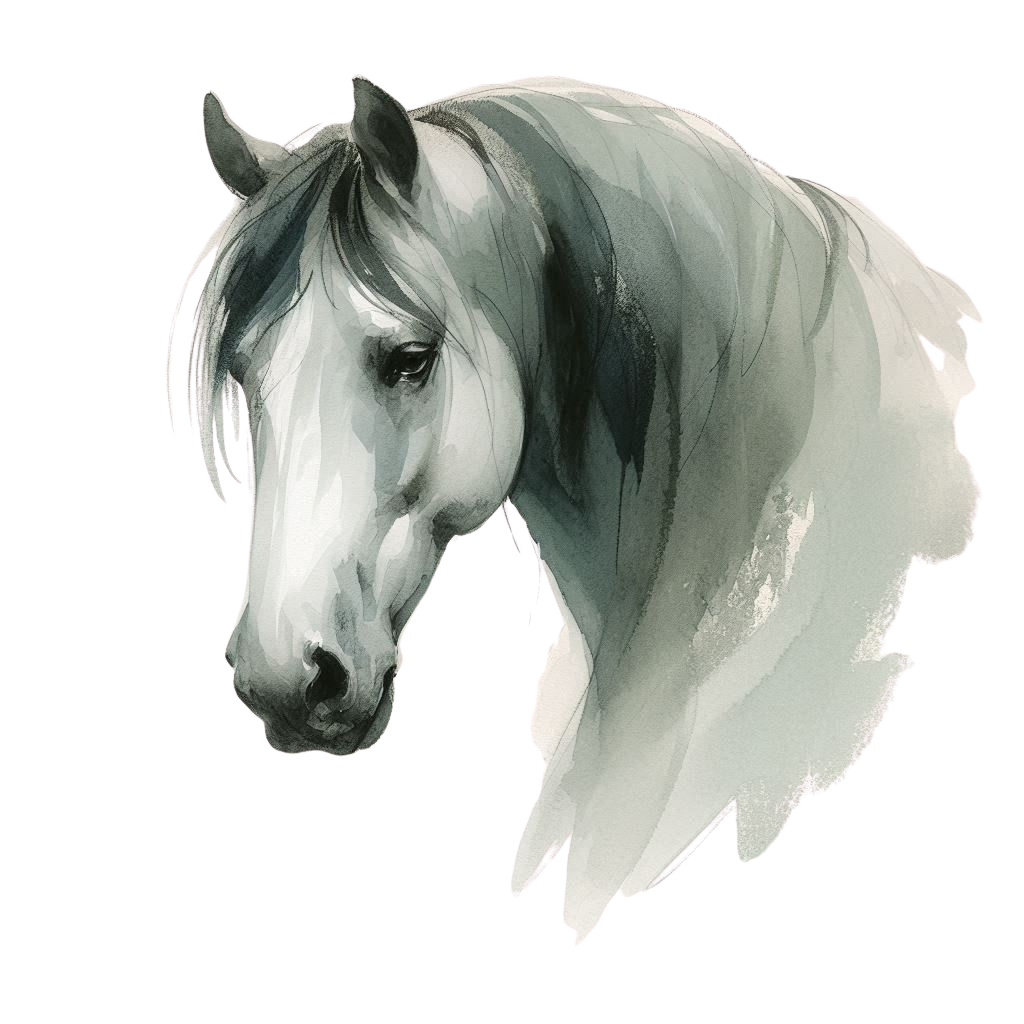
Is My Horse Bored?
What They Actually Need To Be Happy
Is my horse bored? That's the wrong question. Entertainment keeps horses busy. Engagement makes them come alive.
 20 min read
Key Insights
A 2-minute overview
1
Horses aren't bored—they're disengaged. Consciousness needs engagement, not entertainment.
2
Research confirms horses are conscious beings who read your embodied intention through multiple sensory channels—including chemosignals.
3
Three signs of disengagement: learned passivity, restlessness without purpose, and protective disconnection during interaction.
4
Internal awareness ≠ embodied invitation. You can be grounded yet still not create engagement.
5
Conscious beings need: genuine connection (not companionship), meaningful challenge (not activities), and real agency (not choices).
6
Movement Language provides the embodied communication system horses naturally speak—one nervous system talking to another.
Opening
A Story About a Mare
A woman approached me at a clinic with a question I hear constantly: "Is my horse bored?"
She elaborated, "Is my horse bored, I've tried everything the articles suggest."
Turnout with companions. Toys in her paddock. A slow-feed hay net to "keep her busy." An owner who grounded herself before every interaction, who meditated, who'd done years of personal work.
And yet.
The mare stood with glazed eyes, head low, going through motions when asked. Not resistant. Not reactive. Just... absent.
I watched the mare for a long moment.
"She's not bored," I said. "She's disengaged."
The owner looked confused. "Aren't those the same thing?"
They're not.
And understanding the difference changes everything.
◆
Part One
What We've Been Taught About Horse Boredom
For years, when people asked, "Is my horse bored?" the horse world has told us that boredom is the problem and entertainment is the solution:
"Is my horse bored?" becomes "What toy should I buy?"
Give them balls to push around. Hanging toys to manipulate. Food puzzles to solve. Novel objects to investigate. Varied terrain. Different activities.
Keep them busy.
And these things aren't inherently wrong. They can provide momentary stimulation, break up monotony, give horses something to do with their bodies.
But they don't address what horses actually need.
Because horses aren't looking for entertainment.
They're looking for engagement.
And those are fundamentally different things.
Entertainment keeps horses busy. Engagement makes them come alive. The difference isn't subtle—you can see it in their eyes, their energy, the quality of their presence.
◆
Part Two
The Consciousness Question
For decades, we treated horses as if they were primarily driven by basic needs: food, safety, social proximity, physical comfort.
Sophisticated versions of biological machines responding to stimuli.
But research in equine cognition over the past twenty years has revealed something we horsewomen have always sensed but couldn't quite articulate:
Horses are conscious beings.
Not just aware. Conscious.
With subjective experience. With the capacity for sophisticated thought. With emotional complexity beyond simple fear and comfort. With social intelligence that reads intention and responds to the quality of attention they receive.
What Research Reveals About Horse Consciousness
Peer-reviewed research in equine cognition demonstrates that horses:
- Read human emotional states through facial expressions and respond with measurable behavioral and cardiac changes
- Integrate multiple sensory channels (facial expressions, voice tone, body language) to form cross-modal mental representations of human emotions
- Detect human emotional states through chemosignals—including fear, anxiety, confidence, and joy communicated through body odor
- Experience complex emotions beyond simple fear/comfort responses, including curiosity, anticipation, frustration, and joy
- Engage in sophisticated problem-solving that requires conscious awareness and metacognition
- Seek meaningful social interaction and genuine partnership, not just proximity or compliance
- Show preference for agency over passive compliance—demonstrating conscious choice-making
This isn't anthropomorphism. This is what peer-reviewed science confirms.
A groundbreaking study published (January 2026) in PLOS ONE demonstrates that horses can discriminate between human body odors produced during fearful versus joyful emotional states[4]—proving horses literally perceive your internal state through biochemical communication.
PLOS ONE Research (January 2026) - Human emotional odoursThis validates a core principle of Movement Language: authentic internal alignment is foundational to horse-human communication.
This changes everything about what horses need.
Because consciousness isn't something you entertain.
Consciousness is something you engage.
So when you ask "Is my horse bored?" you're often describing a horse whose consciousness has been left out of the equation entirely. A conscious being can't be satisfied with entertainment designed for automatons. Breaking Research (Published January 2026)
A groundbreaking study published January 8, 2026 in PLOS ONE confirms what horsewomen have long sensed: horses can literally smell your emotions.
Researchers at INRAE France demonstrated that horses discriminate between human body odors produced during fearful versus joyful emotional states—providing biochemical evidence that horses perceive your actual internal state, not just what you're trying to project.
You cannot fake embodied intention. Your horse knows through chemosignals.
Jardat, P., et al. (2026). Human emotional odours influence horses' behaviour and physiology. PLOS ONE, 21(1), e0337948.
PLOS ONE Research (January 2026) - Human emotional odoursPause & Reflect
What if your horse isn't resistant or lazy—but simply disengaged because consciousness hasn't been invited to participate?
◆
Part Three
The Three Signs of Disengagement (Not Boredom)
If you're asking "Is my horse bored?" you're probably noticing one of these three signs. But recognizing what you're actually seeing—disengagement, not boredom—changes everything about how you respond.
1. Learned Passivity
What it looks like:
Your horse waits for you to tell them what to do. No initiative. No curiosity. No spark of interest when you arrive. They respond to cues mechanically—correctly, perhaps, but without presence.
There's a flatness in their expression. An absence behind the eyes.
You might think: "Is my horse bored? Depressed? Lazy?"
What's actually happening:
Your horse has learned that their choices don't matter. That their role is to comply, not participate. That they're a body that performs tasks, not a consciousness invited into dialogue.
This isn't laziness or lack of interest.
This is learned helplessness wearing a very quiet face.
They've stopped offering because nothing they offered mattered. They've stopped initiating because initiative was redirected into compliance. They've stopped being present because presence wasn't required—only performance.
2. Restlessness Without Purpose
What it looks like:
Your horse can't settle. They pace or weave or crib. They're reactive rather than responsive—startling at small things, unable to focus, always moving but never finding what they're looking for.
There's energy, but it has no meaningful channel. They want something they can't name or find.
What's actually happening:
Your horse has willingness and capacity with nowhere to direct it. They want to engage, to participate, to use their intelligence and consciousness in ways that matter.
But they don't know how.
Because we've never taught them that kind of participation is possible.
This isn't hyperactivity or poor focus.
This is frustrated engagement desperately seeking an outlet.
They have the energy for a genuine partnership. They want the challenge of conscious collaboration. But they're offered entertainment instead of engagement, activities instead of agency.
So they move. And move. And move. Looking for something that never quite arrives.
3. Protective Disconnection
What it looks like:
Your horse doesn't greet you when you arrive. They tolerate interaction rather than seeking it. They go through the motions without resistance but also without presence—performing adequately but offering nothing beyond what's required.
There's no curiosity about what you might do together. No anticipation. Just patient endurance.
What's actually happening:
Your horse has stopped expecting a meaningful connection. Somewhere along the way, they learned that authentic engagement wasn't on offer—only compliance disguised as partnership.
So they disconnected.
Not dramatically. Not with resistance or refusal. Just quietly withdrew their consciousness from the interaction.
This isn't disrespect or lack of affection.
This is self-protection from repeated disappointment.
They tried to engage. They offered their intelligence, their willingness, their full presence. And what came back was instruction, correction, management—but not genuine dialogue.
So they stopped offering what wasn't wanted.
These three signs—learned passivity, restlessness without purpose, protective disconnection—are what most people mean when they ask "Is my horse bored?" But none of them indicate boredom. They indicate a horse whose consciousness has been systematically excluded from the partnership.
Horses don't need us to make them interesting. They need us to create conditions where their intelligence, consciousness, and capability can emerge.
Pause & Reflect
Have you noticed these signs in your horse? Learned passivity, restlessness with purpose, or protective disconnection?
Understanding that these aren't signs of boredom but of disengagement changes how we respond.
◆
Part Four
What Science Misses (And What Horsewomen Know)
When horse owners ask "Is my horse bored?" they often turn to research for answers. The research on horse consciousness is fascinating and important. It validates what we've sensed, gives language to what we've experienced, provides evidence for claims that were once dismissed as "anthropomorphism."
But research has limitations.
You can study whether horses demonstrate self-awareness. You can measure their problem-solving capacity. You can document their social intelligence and emotional complexity.
What's harder to quantify—what doesn't fit neatly into experimental design—is what happens between beings when consciousness truly meets consciousness.
One nervous system talking to another nervous system.
Not only through mechanical aids or verbal commands. Not through pressure applied and released. Not through rewards dispensed for correct behavior.
Through embodied intention. Through presence translated into physical form. Through invitation rather than instruction.
This is what I call Movement Language—the communication system horses naturally speak.
And it's what creates genuine engagement, not just entertainment or compliance.
(Want to understand more about how horses read our embodied intention? Read: One nervous system talking to another nervous system.)
◆
The Mare With Everything
Yet Her Owner Asked, "Is My Horse Bored?"
Let me return to that mare.
Her owner had done so much work on herself. Years of therapy. Daily meditation. Grounding practices before every interaction. She could feel her feet on the earth, connect with her breath, locate herself in her body.
And yet the mare stood disengaged. Nothing mattered.
Because internal awareness—as valuable as it is—isn't the same thing as embodied invitation.
Feeling grounded in yourself doesn't automatically translate into communication a horse can read.
The mare's owner was present to herself. But she wasn't present with the mare in a way the mare could perceive and respond to.
She had worked so hard on her internal state. But she didn't know how to translate that internal state into the external form—the embodied intention, the spatial dynamics, the movement quality—that horses read as language.
So the mare felt her person's calmness. But not invitation. Not engagement. Not the possibility of genuine dialogue.
Internal Awareness vs. Embodied Invitation
Internal Awareness
(Important but Incomplete):
- Grounding yourself
- Processing your emotions
- Being present to your own state
- Calming your nervous system
Embodied Invitation
(What Horses Need):
- Translating your internal state into a readable form
- Creating spatial possibility
- Offering clear intention through your body
- Inviting participation, not directing compliance
Movement Language is the bridge between these two.
◆
Part Five
What Horses Actually Need:
What Horses Actually Need:
The Three Elements of Engagement
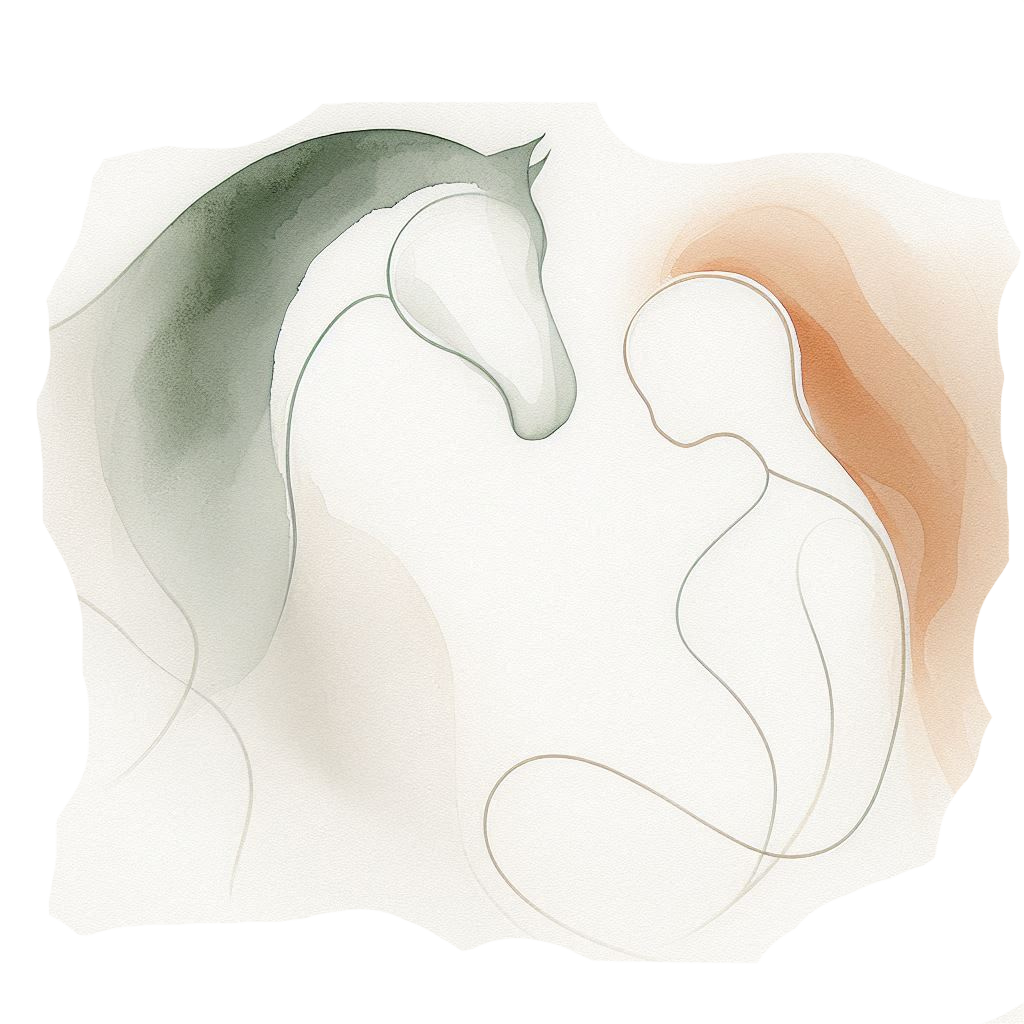
So if the question isn't "Is my horse bored?" what should you be asking instead? The better question is: "Is my horse experiencing conscious connection, meaningful challenge, and genuine agency?" These three elements create engagement at the level horses actually need.
1. Conscious Connection (Not Just Companionship)
Horses are herd animals. We know this.
But we often misunderstand what "herd" actually means.
We think: proximity. Social contact. Other horses nearby.
What horses actually need: reciprocal relationships where both parties contribute and respond.
A herd isn't just bodies sharing space. A herd is consciousness in continuous dialogue. Each horse reading the others. Adjusting. Responding. Offering. Receiving. The whole dynamic system shifting and rebalancing as each member contributes.
When you work with your horse through Movement Language: Teaching multidimensional awareness through embodied movement patterns—you create this kind of relationship.
Your horse isn't just doing what you tell them. They're participating in genuine dialogue.
They read your embodied intention. You respond to their feedback. Both of you adjust. Both of you contribute. Both consciousnesses engaged in reciprocal communication.
This is connection.
Not one-way instruction disguised as collaboration. Not mechanical compliance rewarded with treats. Not even "natural horsemanship" where the human still decides everything and the horse's job is to comply more willingly.
Genuine connection where both beings participate.
Greeting Pattern
The first Pattern of Reciprocity™ creates conscious connection through three elements:
Acknowledge - See your horse's actual state in this moment, not what you want them to be
Open - Create spatial and energetic possibility for your horse to be themselves
Embody - Embody clarity while remaining receptive
Your horse feels recognized and understood.
Ultimate Transition
Before any interaction, horses need us to be clear. The Ultimate Transition prepares you to offer that clarity.
It bridges your internal state to external form—creating the coherence horses can trust and respond to—through three elements:
Imagine - Create clarity in your internal state before moving
Sensation - Feel the embodied quality of what you're inviting
Embody - Translate intention into precise physical expression
This is what the Movement Tunefulness Pattern creates.
2. Meaningful Challenge (Not Just Activities)
Horses need challenge. Real challenge.
Not "things to do" to pass time. Not tricks to learn or obstacles to navigate. Not tasks designed to keep them occupied.
Challenge that engages their intelligence, consciousness, and capacity at progressively deeper levels.
Challenge that requires:
- Physical precision and refinement
- Communication clarity
- Problem-solving engagement
- Progressive mastery over time
- Integration of body, mind, and awareness
The kind of challenge where success isn't just getting the right outcome—it's the quality of communication that creates the outcome.
Where your horse has to think. Has to feel. Has to adjust. Has to bring their full consciousness to the interaction.
This is what Movement Language brings to classical dressage at its highest expression.
Not tricks. Not entertainment. Genuine mastery.
Movement Language brings this kind of challenge to every level of work with horses—from the first greeting to the most refined movement.
Because it's not about what you're doing. It's about how you're communicating while you do it.
And that communication requires constant refinement, progressive clarity, deepening sophistication.
Your horse never runs out of meaningful challenge because consciousness talking to consciousness is infinitely deep.
This is what the Movement Tunefulness Pattern creates.
Movement Tunefulness
The Pattern that creates reciprocal dialogue through three elements:
Embody - Embody the quality of movement you're inviting
Invite - Invite rather than command
Meet - Allow your horse to meet you in preparation and dialogue
This creates genuine partnership where both beings participate.
3. Agency (Not Just Choices)
We've gotten better about giving horses "choices."
Turn left or right. Take this path or that one. Approach the scary object or don't.
This is progress. But it's not the same thing as agency.
Choice is: pick from options I've provided.
Agency is: contribute meaningfully to what happens between us.
Agency means your horse's feedback shapes the interaction. Their hesitation creates a pause where you both recalibrate. Their curiosity opens new directions. Their uncertainty invites more clarity from you. Their confidence allows more complexity.
They're not just choosing from your menu. They're helping write it.
This is what the Patterns of Reciprocity™ create. Every pattern explicitly builds in space for:
- Your horse's feedback and input
- Reciprocal adjustment between both of you
- Co-creation rather than one-way direction
- Genuine collaboration where both parties contribute
This is agency. And consciousness needs it.
Not occasionally, as a treat or reward. Continuously, as the foundation of how you're together.
Horses don't just need things to do. They need to participate, to contribute, to engage their consciousness—not just their bodies. There's a profound difference.
Pause & Reflect
Does your horse experience conscious connection, meaningful challenge, and real agency in your interactions?
Or do they experience proximity, activities, and predetermined choices?
The difference determines whether consciousness can engage.
◆
How We Created Engagement With the Disengaged Mare
Back to that mare who had everything but engagement.
Her owner had tried entertainment: balls, toys, varied turnout, novel objects. The mare showed brief interest, then returned to that flat, absent state.
Her owner had done internal work: grounding, meditation, emotional processing. The mare sensed the calmness but remained disengaged.
Something essential was still missing.
Her owner's internal state was clear. But that clarity hadn't been translated into form the mare could read and respond to.
Before we approached, I used Ultimate Transition—the Pattern that bridges your internal state to external form the horse can perceive.
Then we began with Greeting—creating the space where she could feel recognized and understood, not directed or managed.
Within minutes, something changed.
The mare's eyes brightened. Her ears came forward. She took a step toward us—not because we'd asked, but because the quality of embodied presence invited her consciousness to engage.
Now she was ready to move with us.
Through Movement Tunefulness, we created actual dialogue in movement—co-adhesion between two nervous systems. The mirror neurons firing. The physical space between us alive with communication.
Not me directing. Both of us contributing. Both of us adjusting.
This is what engagement actually looks like.
Her owner watched with tears in her eyes.
"I've never seen her like this," she said. "So... present."
"She's always been capable of this," I told her. "She just needed you to speak her language."
Not pressure and release. Not reward-based conditioning. Not even perfectly calm presence alone.
Movement Language—One nervous system talking to another nervous system. with embodied intention.
Movement Language creates engagement because it addresses what horses actually need: conscious partnership, meaningful challenge, and genuine agency—not just activities to pass the time.
◆
Part 6
The Movement Language Difference
What makes Movement Language different from other approaches—including well-meaning enrichment and even sophisticated "natural" methods?
It addresses all three elements horses need for genuine engagement:
1. Conscious Connection
Through patterns like Greeting and Movement Tunefulness, horses experience genuine dialogue. Not one-way instruction. Not even benevolent management.
Reciprocal communication where both beings contribute.
2. Meaningful Challenge
The work itself requires continuous refinement of:
- Physical precision
- Communication clarity
- Embodied intention
- Reading and responding to feedback
- Progressive mastery over time
There's always depth to explore because consciousness engaging consciousness is infinite.
3. Genuine Agency
Every pattern explicitly creates space for the horse's input to shape what happens. Their feedback matters. Their contribution is essential. Their consciousness is engaged as partner, not performer.
This is engagement at the level horses actually need.
Not activities to fill time. Not entertainment to combat boredom.
Communication that engages consciousness itself.
◆
Beyond Enrichment: Creating Real Engagement
If your horse shows signs of disengagement—that protective disconnection, learned passivity, or restless without purpose—you might be asking "Is my horse bored?" and reaching for more toys or activities. Before you add more entertainment, ask yourself these questions about the quality of your actual interactions:
When you're together, is your horse:
- A participant or a performer?
- Offering input or just complying?
- Engaged with you or tolerating you?
- Growing in competence that matters?
- Challenged in ways that use their full intelligence?
- Experiencing genuine agency or just choices from your menu?
If your honest answers reveal gaps, that's where the work is.
Not in entertaining them more. In engaging them differently.
Not in finding better activities. In learning to communicate in their language.
Not in doing more to them or for them. In creating the conditions where their consciousness can fully emerge.
◆
What Students Are Discovering
"I like what I am seeing with the first pattern. I noticed I wanted to go much quicker than the timing you suggested, but I quelled my impatience. I am grateful you spelled out the times or I would have never spent the time. With my horse, when I found my calm space he immediately chewed and a lesson horse relaxed. Super cool!"
— Heidi, Movement Language Mini-Course Student
"After your course, and for the first time since my car accident two and a half year ago, had no pain, felt straight, never had to 'nag' this so-called 'lazy' horse, and was truly riding as I did as a child, only so much better. You have given me ideas and tools for a new lifetime of communicating with and riding horses."
— Katherine B., DVM
"I enrolled because you named 'Hum' — that fabulous gooey feeling that the horse and I are connected. Connected by a huge, juicy, flexible, strong rubber band."
— Christine P., Retired Group Facilitator
"Once they realize you're willing to essentially talk to them in a way that they understand, the level of cooperation, calmness, and attunement goes up exponentially."
— Karen G., Advanced Dressage Rider
◆
Continue Your Journey
Read Next
One nervous system talking to another nervous system. - Discover how Movement Language creates genuine communication
Read the Book
Going Beyond: Mastering Unspoken Connections - Explore the philosophy and principles behind Movement Language
Join the Community
For The Horse Community - Connect with fellow practitioners creating genuine engagement
Intensive Training
For The Horse Harmony Program - 3-month personalized program for deep transformation
◆
closing
Your Horse Doesn't Need You to Make Them Interesting
If you're asking "is my horse bored?"—the answer might surprise you.
Here's what I've learned integrating 40 years of working with horses - classical dressage, kinesiology, and professional dance training:
They're already intelligent, conscious, capable.
They don't need us to make them interesting. They don't need us to manufacture engagement through clever enrichment strategies or novel activities.
They need us to create conditions where what they already are can emerge.
Where they can participate as partners, not perform as trained responders.
Where the communication between you engages their consciousness, not just directs their behavior.
Where the work you do together creates the kind of engagement that makes their eyes bright, their presence full, their participation genuine.
This is what Movement Language offers.
Not more entertainment. Not more activities to fill time.
A way of being together that engages horses at the level they actually need—consciousness meeting consciousness, One nervous system talking to another.
◆
Seeds for Reflection
- What would change if you approached your horse not with entertainment, but with invitation to genuine engagement?
- Can you notice the difference between your horse being busy versus being truly present with you?
- What might your horse's consciousness need that you haven't yet learned to offer?
- If horses read embodied intention through multiple sensory channels, what is your body communicating right now?
- How might speaking your horse's natural language—Movement Language—transform your partnership?
Let these questions sit with you. The answers aren't immediate—they unfold through practice and attention.
Where This Leads
If you're reading this and recognizing your horse in these descriptions—the learned passivity, the restlessness without purpose, the protective disconnection—please know this:
Your horse isn't broken. Your horsemanship isn't failing.
You simply haven't yet learned the language your horse naturally speaks.
And that language can be learned.
Movement Language provides the framework. The Patterns of Reciprocity™ offer the specific elements. And the practice creates the fluency.
Your horse is waiting—not for more toys, more activities, more entertainment.
They're waiting for genuine engagement.
For consciousness meeting consciousness.
For the invitation to finally, truly participate.
That invitation begins with speaking their language.
◆
Ready to Learn Movement Language?
Discover the three core Patterns of Reciprocity™ that create genuine engagement with horses.
Explore the Mini-CourseLearn the language your horse has been waiting for you to speak.
Scientific References
[1] Smith, A.V., Proops, L., Grounds, K., Wathan, J., & McComb, K. (2016). Functionally relevant responses to human facial expressions of emotion in the domestic horse (Equus caballus). Biology Letters, 12(2), 20150907.
https://doi.org/10.1098/rsbl.2015.0907
[2] Nakamura, K., Takimoto-Inose, A., & Hasegawa, T. (2018). Cross-modal perception of human emotion in domestic horses (Equus caballus). Scientific Reports, 8(1), 8660.
https://doi.org/10.1038/s41598-018-26892-6
[3] Cozzi, A., Mota-Rojas, D., Hernández-Ávalos, I., Verduzco-Mendoza, A., & Domínguez-Oliva, A. (2025). Chemosignaling in equids: Behaviour and biochemistry of olfactory communication. Applied Animal Behaviour Science, 106476.
https://www.inrae.fr/en/news/joy-fear-horses-sense-our-emotions
[4] Jardat, P., Destrez, A., Damon, F., Tanguy-Guillo, N., Lainé, A.S., & Lansade, L. (2026). Human emotional odours influence horses' behaviour and physiology. PLOS ONE, 21(1), e0337948.
https://doi.org/10.1098/rsbl.2015.0907